Technical stack
Google Ads
Databricks
Fivetran
Python
Tableau Cloud
ClickMagick
Neural Prophet
Zoho Books
Engagement summary
Discovery sessions with the client revealed the core measurement problem: campaigns were running across dozens of car brands, products, and service types, but there was no consistent naming structure — Google Ads revenue was estimated, not measured, and there was no reliable link between an ad click and a Shopify purchase.
The first deliverable was a formal UTM taxonomy built from scratch for this product catalog: an 8-dimension encoding system covering stage, country, car brand, product category, and campaign theme at the campaign level, and car model, product, and service intent at the ad group level. A parameter guide document standardized tagging across the entire account going forward.
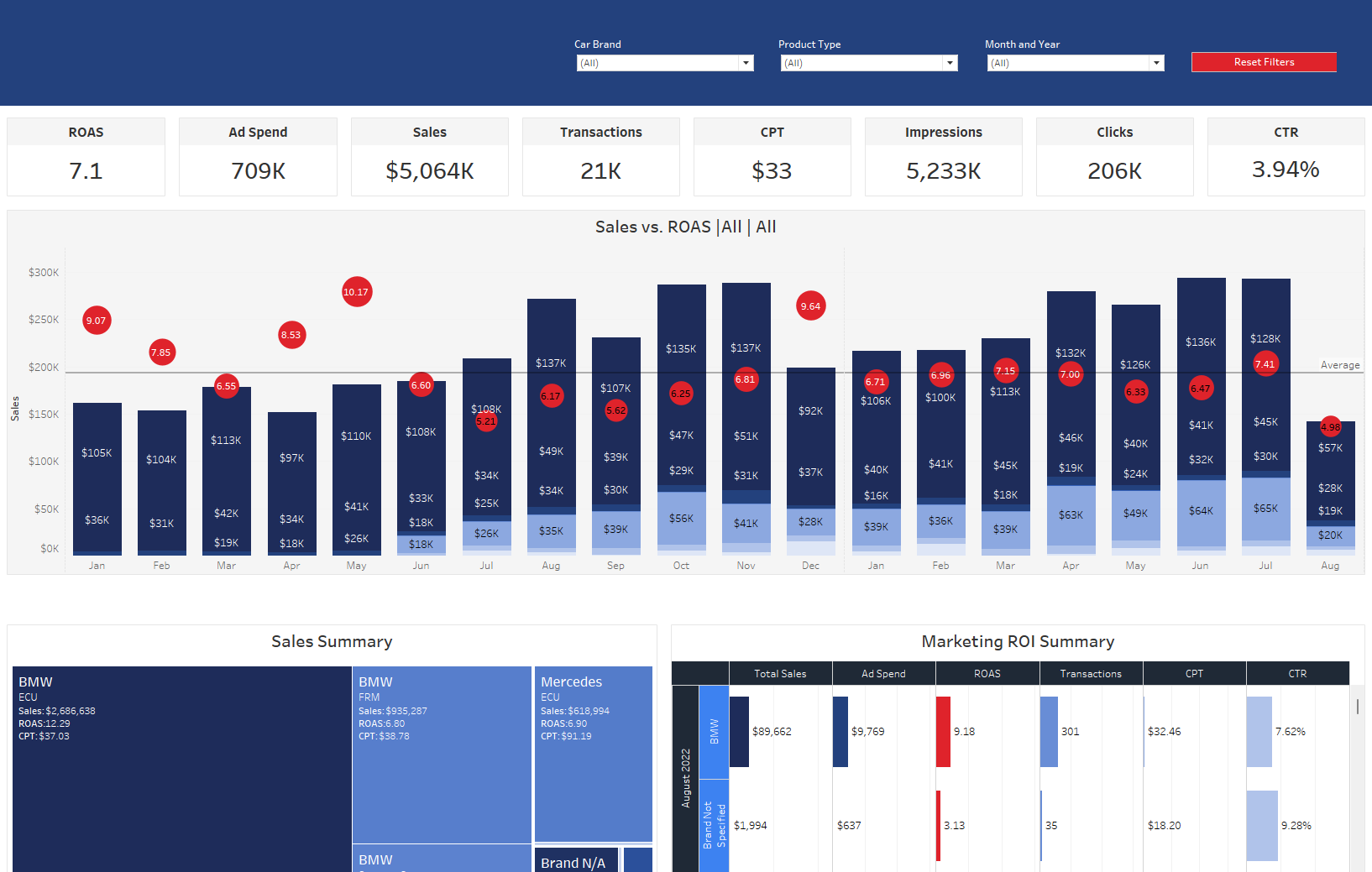
With a reliable attribution signal in place, the analytics platform was built around it: a Databricks Delta Lake lakehouse parsing five data sources, a pipeline that splits UTM strings on ingest and joins ad cost against exact Shopify revenue, five Tableau Cloud dashboard views from executive to keyword-level, and a Neural Prophet sales forecast model. The taxonomy became the operating standard for weekly paid media performance reviews — giving the account team ROAS and CPL visibility by campaign, channel, and audience segment, and turning raw Google Ads spend data into accountable, channel-level optimization recommendations.

 Expert-Vetted
 Top Rated